Our retail store is now closed. Retail services are ONLINE ONLY.
Stringing services are now HOME-BASED. If you need a racquet strung, place your order through the website. Our staff will text you the details regarding dropoff/pickup. Dismiss
Racquet Network staff are certified experts. Many are also certified coaches. Racquet Network Experts undergo extensive training and product knowledge testing in order to ensure that we have the most knowledgeable staff in the racquet sports industry.
BBB_logoRacquet Network is now an accredited member of the Better Business Bureau.
“This is an exciting day for the network,” said Executive Director Brent Johner in a statement yesterday. “Although we have been in voluntary compliance with their policies and ethics for nearly two years, we have not been able to display the BBB logo on our website. Now that we are officially accredited members, that will change.”
Look for the BBB logo to be displayed very prominently on the Racquet Network website over the coming days and weeks.
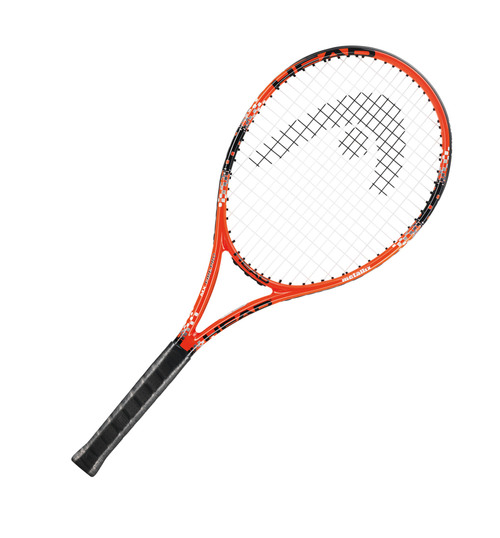
Head MX Fire ProThe first thing that you have to consider when you break a string on your tennis racquet is whether or not you should restring it at all. If, for example, you paid less than $50 for your racquet, it may be better to toss it and just buy a new one.
Depending on where you take your racquets for maintenance and the quality of string you use, the price for stringing can range anywhere from $25 to $40. So restringing a racquet that cost less than $50 new is generally not a good investment.
Once that decision is made, you then have to consider the type of string you wish to use. That decision will be based on many considerations including your playing level, the number of crosses and mains on your racquet, whether or not you suffer from tennis elbow and so on.
Your stringer can help you make a decision about the kind of string you should use. Alternatively, you can use the Internet to do some research and make a decision on your own.
Finally, you arrive at the question of tension. How tight should you string your racquet?
The answer to this question depends on how you want your racquet to perform. If you want a racquet that provides stability and power, you will want to string it one way. If you want a racquet that provides touch and control, you will want to string it another way.
Every racquet has a recommended range for tension. My Wilson [K]Surge, for example, has a recommended range of 55-65 pounds. The low end of this range will create a string bed with more give. The high end of this range will create a tighter string bed.
Beginners and intermediate players who play infrequently will usually choose to string their racquets at the low end of the range because they want their strings to absorb much of the energy upon impact with the tennis ball. They also want the power that looser strings seem to offer.
Looser string beds are more forgiving than tighter string beds. So stringing their tennis racquet at the low end of the range allows players to get away with more misshits and other mistakes.
Many advanced and expert players, on the other hand, prefer a tight string bed on their tennis racquets. Players at this level have enormous control over their swing speed. They also have superior directional control and don’t make as many errors as beginner or intermediate tennis players.
For the rest of us, who are somewhere in between the beginners and the experts, the best tension is also somewhere in the middle. Find the label on your racquet indicating the recommended tension for your racquet and then instruct your stringer to string it somewhere in the middle.
[CALGARY, AB] – Racquet Network’s founder and executive director, Brent Johner, has been awarded the $5000 grand prize in Alberta Health’s STAND UP FOR YOUR LIFE contest.
The grand prize winner, announced yesterday, receives a $2,500 customized Be Fit For Life Personal Health & Wellness Plan and a $2,500 Sportchek gift card.
Johner entered the contest in mid-December after seeing a commercial broadcast during a Calgary Flames game on Sportsnet West Television. His winning entry described how he “stood up for his life” by stopping smoking, changing his diet and creating Racquet Network.
As part of the terms of the agreement, Sportsnet Television is flying out from Toronto in early February to shoot a commercial featuring Johner and (we hope) at least some mention of Racquet Network.
“Racquet Network changed my life,” said Johner, “and I’ve heard from dozens of other people how it’s changing theirs. With a little publicity and some momentum, we can help change the lives of millions more.”