Our retail store is now closed. Retail services are ONLINE ONLY.
Stringing services are now HOME-BASED. If you need a racquet strung, place your order through the website. Our staff will text you the details regarding dropoff/pickup. Dismiss
Racquet Network staff are certified experts. Many are also certified coaches. Racquet Network Experts undergo extensive training and product knowledge testing in order to ensure that we have the most knowledgeable staff in the racquet sports industry.
Racquets designed for elite players are generally not suitable for intermediate players.Badminton racquets designed for elite badminton players are generally not suitable for intermediate players. While many players simply want to buy the most expensive racquets designed for the very best athletes in the world, this is rarely a wise decision.
Adult intermediates generally lack the timing and the upper body strength of elite athletes. As a result, they will need some help from their racquets on shots such as the cross-court backhand clear. Compared to elite players, therefore, palyers in this group will need more flexible and more forgiving racquets.
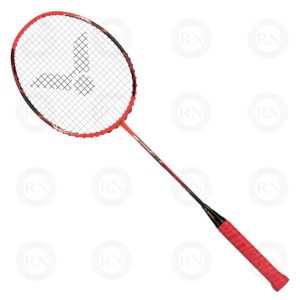
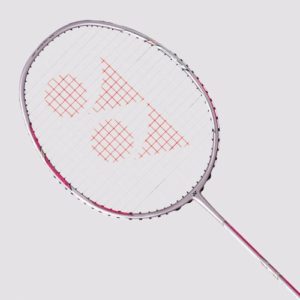
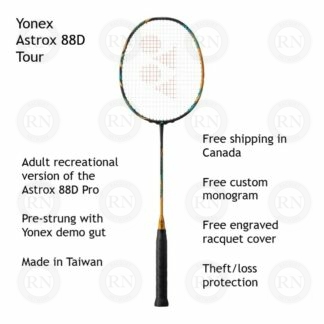
Below is a sample of badminton racquets that our experts have determined to be generally suitable for female adult intermediates. For more information, please come into the store and consult with one of our experts. We are open 7 days a week and we carry Calgary’s largest selection of badminton racquets for men, women, teens and children.
For a full list of racquets in this category, please check out our ONLINE RACQUET SELECTOR. You can sort by sport, gender, brand, size, weight, balance and more.
Badminton Racquets for Female Adult Intermediates
A selection of badminton racquets that may be suitable for intermediate female badminton players.
For a full list of racquets in this category, please check out our ONLINE RACQUET SELECTOR. You can sort by sport, gender, brand, size, weight, balance and more.
Advanced female athletes are strong, fast and have excellent timing.The differences between advanced and elite female badminton players are typically differences of degree. In other words, both are strong, but elite players are a bit stronger. Both are fast, but elite players are a bit faster. And both have good timing, but elite players are just a bit better in this area. As a result, there is a lot of overlap in the racquets for this group.
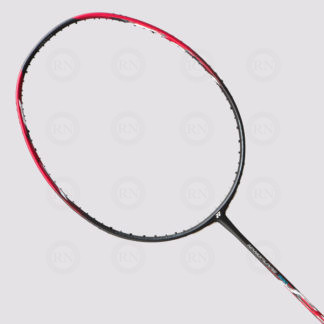
Below is a sample of badminton racquets that our experts have determined to be generally suitable for advanced female badminton players. For more information, please come into the store and consult with one of our experts. We are open 7 days a week and we carry Calgary’s largest selection of badminton racquets for men, women, teens and children.
For a full list of racquets in this category, please check out our ONLINE RACQUET SELECTOR. You can sort by sport, gender, brand, size, weight, balance and more.
Badminton Racquets for Advanced Ladies
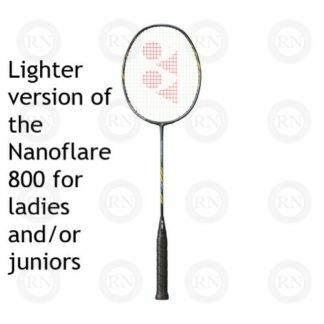
A selection of badminton racquets for advanced ladies.
For a full list of racquets in this category, please check out our ONLINE RACQUET SELECTOR. You can sort by sport, gender, brand, size, weight, balance and more.
Racquets at this level are stiff with tiny sweet spots.Elite female badminton players can use racquets that are simply not beneficial for players at lower levels. Racquets at this level are stiff with tiny sweet spots. Strung at very high tensions, these racquets rely on the strengths and abilities of the players and do provide any additional power.
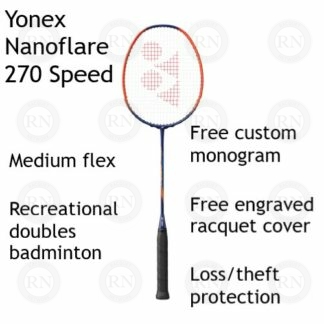
Below is a sample of badminton racquets that our experts have determined to be generally suitable for elite female badminton players. For more information, please come into the store and consult with one of our experts. We are open 7 days a week and we carry Calgary’s largest selection of badminton racquets for men, women, teens and children.
For a full list of racquets in this category, please check out our ONLINE RACQUET SELECTOR. You can sort by sport, gender, brand, size, weight, balance and more.
Badminton Racquets for Elite Females
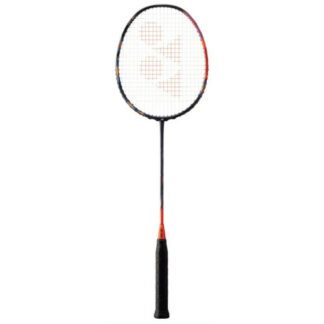
A sample of racquets our experts believe are suitable for elite female badminton players.
For a full list of racquets in this category, please check out our ONLINE RACQUET SELECTOR. You can sort by sport, gender, brand, size, weight, balance and more.
This article was created as a resource for club promoters who are trying to enlist the assistance of their members in the task of attracting new members. All of the articles in this series offer suggestions to club members regarding how they can help to attract new members. Club promoters are encouraged to link to it if they wish to provide suggestions to their members.
Why Beginners Matter
Spending Habits of New PlayersRacquet Network has been in business for a long time. We offered our first lessons in 2004. We opened our first store in 2010. During the years since we first opened our doors our coaching team has taught more than 10,000 adults and children to play racquet sports. We have also registered more than 50,000 sales transactions with players at all levels.
As you can imagine, this many people and this many transactions across this many racquet sports leave behind a large amount of data to aggregate. And from this aggregate data, we can draw some interesting conclusions that are beneficial to every type of racquet sports club.
Here is a concrete example of how that data can be used. There are two squash clubs in our part of the city. Both have about the same number of players, both cater to adult males. Club A is closer to us than Club B, so you would expect that Club A would generate more sales for us than Club B. In fact, however, Club B generates more spinoff business for our store than Club A for one simple reason.
Club B is marginally better than Club A at attracting new players. And by that we don’t mean members who are new to Club B; we mean players who are new to playing the game of squash. Or in other words, Club B is better than Club A at attracting and retaining beginners.
Club A is caught in what we call a cycle of high performance failure. They have turned their club over to a volunteer who spends all of his time trying to attract better players from other clubs. He is focussed almost entirely on Club A’s interclub team performance. Therefore, whether he knows it or not, under his leadership, Club A is pursuing a high performance agenda — an agenda that will ultimately fail the club’s shareholders.
Club B, on the other hand, is more open both to new members and new players. They have more to offer than just an opportunity to play on a winning interclub team. They actually have programs and activities that are attractive to beginners who may be two or three years away from having enough confidence to join an interclub squash team.
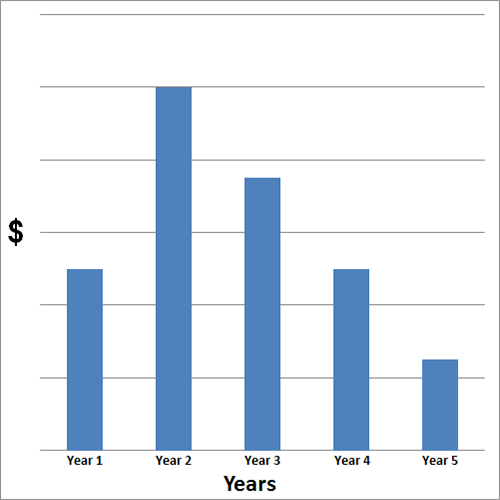
Spending Habits of New PlayersWhy does this matter? Take a look at the graph at the start of this post. It is an approximation based on aggregate internal data gathered from years of tracking customer purchasing at Racquet Network.
Each bar represents one year of expenditures for players who are new to the sport. You can see that new players spend as much in their first two years as they do in their next three years combined. In fact, most players spend more in their second year of involvement with a new racquet sport than they do in any other year.
Now think about a club filled with 100 players in Year 5 and beyond (Y5+). If you look at what these players are likely to spend on their sport, you will see that 100 of these guys will spend as much as 20 players in their second year (Y2). So a club with 50 Y5+ members and 50 Y1/Y2 members is in a much stronger position financially than a club with 100 Y5+ members.
Think back to glory days for squash in the 80s and 90s. In those days, clubs could make some money. And in those days, the clubs were full of beginners. As the sport of pickleball is demonstrating across Canada today, clubs that are full of Y1s and Y2s are way better off than clubs full of Y5+ players.
So when we say that Club A is caught in a cycle of failure, it should be clear now what we mean. Success in the club’s interclub standings is coming at the expense of Club A’s bottom line. Fortunately for us, we are not shareholders in Club A. So, unlike the actual shareholders, we can be somewhat clinical about their prospects.
However, we would prefer to see Club A succeed and stay open. Given their proximity to our business, it would be nice to see them regain their footing and move away from a high performance agenda toward a high participation agenda. In fact, we think it would be nice to see every club in Canada now pursuing a high performance agenda move to back to a high participation agenda because that would be good for the clubs and for every retailer and manufacturer who serves these clubs.
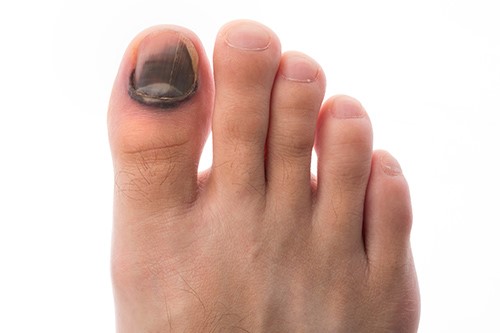
Are one or more of your toenails turning black? Yes. Then your shoes are too small. Specifically, your shoes are too short for court sports.
Here at Racquet Network, our expert staff are constantly astonished at the number of stubborn people who come into our store to buy new shoes because the shoes they are wearing are damaging their feet and who end up buying exactly the same size, expecting a different result.
Here is how a typical conversation with one of these customer’s goes …
Staff: “Hi there. How can I help you?”
Customer: “I need some new shoes. The shoes I have are too small. They are making my toenails turn black.”
Staff: “Oh no. That’s not good. What size are they?”
Customer: “They are size 9.”
Staff: “OK. So would you like to try on something in a size 10?”
Customer: “No. Size 10 is too big. I wear a size 9.”
Staff: “I’m sorry. I must have misunderstood. I thought you said your size 9 shoes were causing your toenails to turn black.”
Customer: “Well these ones are. But I just need a different size 9. I am always a size 9.”
It is never good when a fitting starts this way, but this is exactly the way many fittings start. The customer has a number in their head and no amount of expert advice or actual evidence will sway them. So, they end up leaving with the wrong size in spite of our best efforts to convince them otherwise.
Fathers of teen-aged daughters can be especially frustrating for our shoe experts. Some of them seem to think that their daughters are less attractive if they wear shoes that actually fit, so they buy shoes that are too small and that end up causing injuries.
This not a joke. It’s not just a story we tell. This actually happens. We have seen teenaged girls leave our store in tears because they know that the shoes their fathers are buying for them are too small and will make their toenails fall off. We have had angry fathers storm out of the store because we demonstrated to them that their daughter’s feet are a size and half bigger than they used to be.
We’re not sure why but men in general rarely seem to know their shoe size. “What size are you?” we will often ask. “Size 10,” guys will say. “What size are those?” we ask, pointing at the shoes on their feet. When we check, we usually find out they are not even close to what they thought they were wearing.
Racquet Network staff are trained to fit people for court shoes. Our staff know that court shoes have to be longer than walking-around-shoes because players have to stop suddenly and change direction. When shoes are too short for this, toes bang against the end of the shoe causing toenails to blacken and fall off.
Our staff also understand that width is important. When a player’s feet are wider than the platform of the shoes they are wearing, they are prone to specific types of injuries that can lead to arthritis later in life.
Our experts want to see all customers leave our store with shoes that fit. They don’t have any preconceived ideas about that size the customer should wear or what size the customer (or their father) might want to wear. They only thing they are concerned about is what actually fits. For that to happen, the shoe must be long enough and it must be wide enough.
At the end of the day, though, they can’t force anybody to buy the right size. So they will always have to deal with the disappointment of customers who stubbornly resist their best advice and insist on buying shoes that are too short or too narrow just because that is the size they always buy.