Posted on

A First for Spain

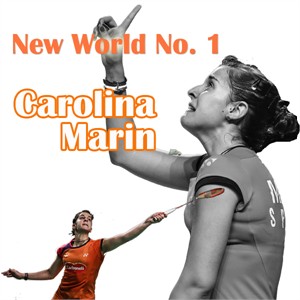
Carolina MariAs of June 11th, Carolina Marin (NANORAY Z-SPEED, SHB-02LX) has made history by becoming the first Spanish badminton player to achieve a ranking of World No. 1.

The Spanish shuttler has several achievements to her name. Last year she won at BWF World Championships, becoming the first Spanish player to do so. In 2015 she had consecutive triumphs at the Yonex ™ All England, Malaysia Open Superseries Premier and Australian Open Superseries. With accomplishments like these, she now truly stands among the world’s elite.

Posted on

The Other Side of the Net

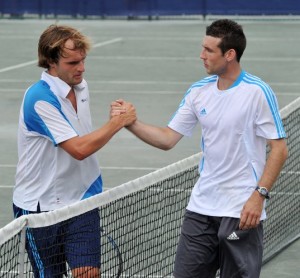
Tennis HandshakeIn an average year, Racquet Network staff sell racquets to more than 2000 customers. Some know exactly what they want when they walk through our doors, but most do not. Most need some help.

In order to ensure that we are connecting customers with racquets that are properly suited to their needs, we ask a series of questions that focus on frequency and style of play. The frequency questions are easy for most people. Most customers tend to have a good idea of how often they will be playing with the racquet they are buying.

The more difficult questions are those related to the customer’s style of play. Most people haven’t really thought about how they play. Are you an attacker or a defender? Are you a pounder or a placer? What are your biggest weapons: serves, serve returns, volleys, drop shots or something else?

They way you play matters. If your game is based on a big serve, you will want a racquet that helps you serve even bigger. If your game is purely defensive, you will want a racquet that enhances defensive shotmaking. Whatever your game — tennis, squash, badminton, pickleball or racquetball — the racquet you choose must fit your playing style.

An equally important consideration is the opposition you will be facing on the other side of the court. In tennis, for example, if you are playing an opponent who hits hard penetrating ground strokes or punishing first serves, you will want a stiff frame to counter with. Why? Because the last thing you want when you are playing a pounder is a soft frame that flexes on contact and sprays the ball in unintended directions.

The same is true for badminton players. You may want to play an attacking style, but if you are part of a drop-in group and half of the players are better than you, you will probably be attacking half of the time and defending the other half. In this case, you might be wise to choose a balanced racquet that allows you to play both styles. Or you might choose to have two racquets in your bag: one for attacking and one for defending.

Think of your racquet bag as a tool kit. If the only tool in your kit is a hammer, you will have to treat everything like a nail. But if you have a hammer, a screwdriver and a pair of pliers, you will be better equipped to deal with a variety of tasks.

New players tend to buy one racquet and use it for everything. The same is true for professionals who are able to impose their game on opponents regardless. In between these levels you will find some smart players and some not-so-smart players.

The not-so-smart ones buy the same racquet or the same category of racquet over and over. Look in their bags and you will often find a half dozen racquets in different colours and styles all of which do exactly the same thing.

Smart players, on the other hand, have a variety of tools in their chests. At the very least, they will have one racquet for attacking and one for defending. The smartest will have a variety of frames customized in a variety of ways to use against the opponents they play most often.

Choosing the right tool for the right job is essential for most advanced intermediate players. In games where the margin of difference is often only a couple of points, anything that gives you an advantage — or takes away an opponent’s advantage — is worth taking a look at.

[wdsm_ad id=”39760″ class=” ” ]

Posted on

Yonex Arcsaber 11 Racquet Review

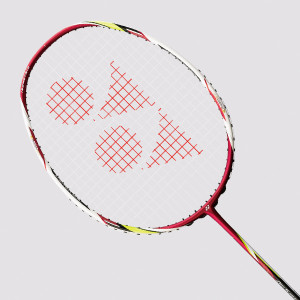
YONEX ARCSABER 11
This racquet is right for me right now. Six months from now, who knows?
As my readers already know, I have returned to badminton recently after a break of several years. Over the first month, I experimented with an number of Yonex ™ badminton racquets before finally settling on the Nanoray GlanZ as the best frame for my game at that moment.

That decision was made a month ago. At the time, the GlanZ offered me exactly what I needed. After a long break, my timing was off and I was not hitting the shuttle directly in the center of the string bed. Since the GlanZ is a forgiving racquet with a large sweet spot, it was perfectly suited to my game at the time.

Now, a month later, my game has progressed and it is time for a new frame. So last week, I tried a variety of Yonex frames including the Arcsaber Flash Boost, the Voltric Z-Force II and the Nanoray Z-Speed.


Racquet Selector For a full list of racquets in this category, please check out our ONLINE RACQUET SELECTOR. You can sort by sport, gender, brand, size, weight, balance and more.

The Flash Boost I tried was a 5U weight, which was far too light for me. The Nanoray Z-Speed was heavier (4U), but still wasn’t heavy enough. As with the GlanZ, my clears with both of these racquets were not deep enough to push my opponents back. Instead, they were dropping five to six feet inside the court, which was setting up too many successful smashes for my opponents.

My experience with the Voltric Z-Force II was the opposite. Instead of dropping inside of the court, I was actually hitting the shuttle out the back and sides of the court. (To be fair, the Z-Force II I played with was a 3U, which is quite heavy and which may be the reason I was hitting out. I did not try the 4U or the 5U.) The head heaviness of the frame coupled with the 3U weight was just too much for my stroke. This racquet is too powerful for me right now.

Much to my surprise, the Arcsaber 11 turned out to be perfectly suited to my game at this moment. While it is a 3U like the Z-Force II I was using, it is not head heavy. In fact, it is evenly balanced. Strung at the bottom of the tension range (for maximum power), my clears with this racquet were dropping about four inches inside the baseline whenever I hit them cleanly. My drops and net shots were exactly how I like them and the racquet was much better for smashing than the lighter GlanZ.

One of the major features of the Arcsaber series is versatility. I am playing in a drop-in group where some of the players are better than me and some are not as good. So every game is a little different. Sometimes I am on the attack; sometimes I am on the defensive. The Arcsaber series is designed for exactly this scenario. While the Voltric series is designed primarily for offence and the Nanoray series is designed primarily for defence, the Arcsaber series is balanced. It is a compromise that allows for a little bit of both.

Right now, given the state of my game, the Arcsaber 11 is the perfect frame for me.


Racquet Selector For a full list of racquets in this category, please check out our ONLINE RACQUET SELECTOR. You can sort by sport, gender, brand, size, weight, balance and more.
Posted on

Dealing with Common Injuries – Bursitis

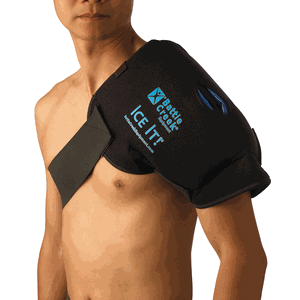
Battle Creek Ice It Shoulder SystemBursitis (bur-SY-tis) is a painful condition that affects fluid sacs that cushion the bones, tendons and muscles near joints. It occurs when these sacs become inflamed.

The most common locations for bursitis are shoulders, elbows and hips. However, it can also develop in knees, heels and at the bases of big toes. Bursitis often occurs near joints that perform frequent repetitive motions, such as the hitting/serving shoulder in racquet sports players.

Treatment typically involves resting the affected joint, icing it and protecting it from further trauma. In most cases, bursitis pain goes away within a few weeks with proper treatment, but recurrent flare-ups of bursitis are common.

For racquets sports players, especially tennis, squash, pickleball and badminton players who play frequently, bursitis is a common injury. If left untreated, it can also become a debilitating injury that keeps players off of the court for weeks at a time.

As a coach and player who is frequently on court for twenty or more hours per week, I can speak from personal experience regarding the consequences of leaving bursitis untreated. In my younger years while teaching and playing racquet sports, I estimate that I missed several hundred matches and lessons.

Since then, however, I have developed a very effective strategy for preventing the development of bursitis and for healing it quickly once it occurs. In fact, I now rarely miss matches or lessons due to bursitis.

My strategy is very simple. I keep a freezer full of ice packs and I use them every time I get home from playing or teaching. Specifically, I keep three shoulder packs and three general purpose rectangular ice packs in the freezer. I use the shoulder packs after every match regardless of whether I am feeling pain or not. The shoulder packs help me cool the shoulder joint down quickly and prevent inflammation from developing in the fluid sacs.

The other, rectangular ice packs I use only when I am feeling pain in a particular non-shoulder joint, such as my knee or the base of my foot. At the first sign of pain in these areas, I ice, ice, ice until the pain goes away — because this is the best way I have found to prevent inflammation from settling in and becoming a longterm problem.

Top 3 Tips for Dealing with Bursitis

Here are my Top Three Tips for players who want to treat or prevent bursitis:

1. Keep at least three ice packs in the freezer. The trick is to rotate each one 20 minutes on and 20 minutes off. A single ice pack is not enough because it takes six hours to freeze again after you use it. Having three allows you to ice for about 60 minutes after every match.

2. Large ice packs are better than small ice packs. I look for ice packs that are long, wide and thick — about twice as big as I think I need. The small ones melt too quickly and don’t provide penetrating cooling. This is especially important in the shoulder where the fluid sacks are deep in the joint below several layers of muscle. Small ice packs will cool the surface, but the cooling will not reach the joint.

3. Shoulder systems are extremely convenient because shoulders are difficult joints to ice. Using a harness system like the one in the image above allows me to ice my shoulder while moving around. In fact, I am wearing one now while I am typing this piece. If I wasn’t wearing it, this would be difficult to do.

Preventing Bursitis

Preventing bursitis is infinitely preferable to treating it. An hour of ice after every match is simple and effective but allowing it to develop and settle into your shoulder may result in weeks of ice, drugs and physiotherapy. My best advice is to avoid getting it in the first place.

Posted on Leave a comment

Court Shoes: Yonex vs. Adidas

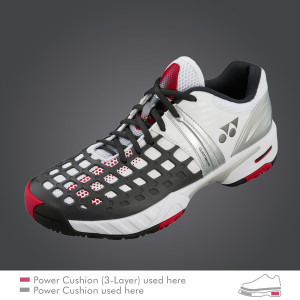
YONEX SHT PRO ALL COURT GREY 2015 1Yesterday, we had a customer come into our southwest Calgary store to buy a pair of shoes. He wanted to use them for tennis, volleyball and dodgeball. He only wanted to buy one pair of shoes.
We started, of course, with questions so that we could determine his needs. Q: Where do you play tennis? A: Indoor at The Tennis Academy and outdoors on public courts. Q: What kind of floor do they have where you play volleyball? A: Hardwood. Q: What kind of floor do they have where you play dodgeball? A: Rubberized all-court surface.

So here we have a client who plays on three different surfaces: acrylic, hardwood and rubberized all-court. Normally, we would recommend carbon rubber for acrylic, natural organic rubber for hardwood and synthetic rubber for all-court. But in this case, the customer wants to buy one shoe that will work in all contexts. So what do we do?

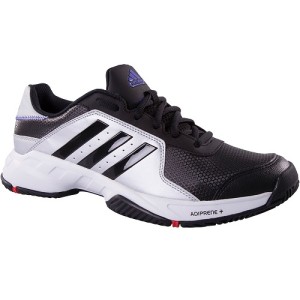
ADIDAS BARRICADE COURT BLACK BLACK SILVERQuite simply, all we can so is offer information on the pros and cons. We cannot, in this case, make a recommendation. Carbon rubber will stand up well on acrylic, but it may be dangerously slippery on hardwood. Natural organic rubber provides excellent traction on hardwood, but will quickly be ground down by acrylic. Synthetic rubber offers the best all around compromise, but offers poor traction on hardwood and poor durability on acrylic.

In the end, the customer tried on more than a dozen pair of shoes in two sizes. Some were rejected on price. Some were rejected on colour. Some were rejected on comfort/fit. Eventually, it came down to two pair: Adidas ™ Barricade Court at $95.00 and Yonex ™ SHT PRO at $150.00. Our expectation was that he would opt for the cheaper shoes.

So what did he do? After 20 minutes of thoughtful consideration, after switching both pair back and forth, one on the left, one on the right. After much pacing and dancing around the store playing imaginary dodgeball, he chose the Yonex SHT PRO. His words: “They just feel better in every way. They just feel like a better shoe. Normally I wouldn’t bother paying the extra 50 bucks, but these just feel like they are worth more.”