Our retail store is now closed. Retail services are ONLINE ONLY.
Stringing services are now HOME-BASED. If you need a racquet strung, place your order through the website. Our staff will text you the details regarding dropoff/pickup. Dismiss
BBB_logoRacquet Network is now an accredited member of the Better Business Bureau.
“This is an exciting day for the network,” said Executive Director Brent Johner in a statement yesterday. “Although we have been in voluntary compliance with their policies and ethics for nearly two years, we have not been able to display the BBB logo on our website. Now that we are officially accredited members, that will change.”
Look for the BBB logo to be displayed very prominently on the Racquet Network website over the coming days and weeks.
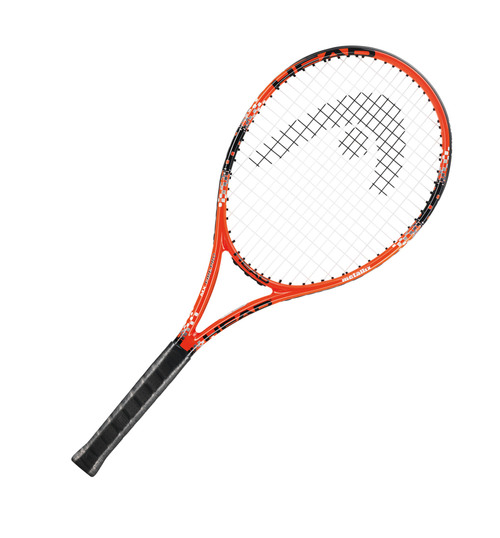
Head MX Fire ProThe first thing that you have to consider when you break a string on your tennis racquet is whether or not you should restring it at all. If, for example, you paid less than $50 for your racquet, it may be better to toss it and just buy a new one.
Depending on where you take your racquets for maintenance and the quality of string you use, the price for stringing can range anywhere from $25 to $40. So restringing a racquet that cost less than $50 new is generally not a good investment.
Once that decision is made, you then have to consider the type of string you wish to use. That decision will be based on many considerations including your playing level, the number of crosses and mains on your racquet, whether or not you suffer from tennis elbow and so on.
Your stringer can help you make a decision about the kind of string you should use. Alternatively, you can use the Internet to do some research and make a decision on your own.
Finally, you arrive at the question of tension. How tight should you string your racquet?
The answer to this question depends on how you want your racquet to perform. If you want a racquet that provides stability and power, you will want to string it one way. If you want a racquet that provides touch and control, you will want to string it another way.
Every racquet has a recommended range for tension. My Wilson [K]Surge, for example, has a recommended range of 55-65 pounds. The low end of this range will create a string bed with more give. The high end of this range will create a tighter string bed.
Beginners and intermediate players who play infrequently will usually choose to string their racquets at the low end of the range because they want their strings to absorb much of the energy upon impact with the tennis ball. They also want the power that looser strings seem to offer.
Looser string beds are more forgiving than tighter string beds. So stringing their tennis racquet at the low end of the range allows players to get away with more misshits and other mistakes.
Many advanced and expert players, on the other hand, prefer a tight string bed on their tennis racquets. Players at this level have enormous control over their swing speed. They also have superior directional control and don’t make as many errors as beginner or intermediate tennis players.
For the rest of us, who are somewhere in between the beginners and the experts, the best tension is also somewhere in the middle. Find the label on your racquet indicating the recommended tension for your racquet and then instruct your stringer to string it somewhere in the middle.
Racquet Network Logo[CALGARY, AB] – It’s hard to believe but Racquet Network launched five years ago today as a network of two Canadian squash players from the community of Oakridge in southwest Calgary.
Today, on the fifth anniversary of those small beginnings, we have more than 500 members in Canada, the United States, Australia and China. We also include much more than just squash. This year we have added nearly a dozen new sports to our long-time mix of tennis, squash, badminton, racquetball and table tennis.
The origins of our growing network can be traced to a broken-down old squash court in the back of the Oakridge Community Centre in January of 2002. Built twenty-five years earlier when squash was a booming sport, the court had long since been abandoned by squash players. Its only use, in 2002, was as a tiny gym for the tots of the community centre preschool.
Nothing is better testimony to the rough state of this court than the fact that the plywood of the front wall was slowly disintegrating. Every time a ball hit it with any amount of force, a small cloud of disintegrated wood dust would puff into the air. By the end of every match, the air in the room was visibly saturated with dust particles. At times it looked like we had spent the past hour smoking cigars instead of playing squash.
By the end of our first year, a wide, crumbling depression had formed in the front wall around the spot where serves would typically make contact. But our little network had grown to 26 squash players, so we considered the year a success.
In year two, we added tennis to our activities and our network swelled to 75 players. Meanwhile, the depression in the front wall of the squash court was spreading like a giant stain. Small holes, just large enough to poke a finger through, were beginning to appear and multiply.
That was enough for the facility manager. Earlier attempts to repair the front wall had failed; it was time for a new wall. With the new wall came new players, fortunately. So we ended year three with a network of 150 squash and tennis players, most of whom lived in southwest Calgary.
Today, Racquet Network has enough squash players in Calgary (250) to fill five squash courts. We have enough tennis players (350) to fill seven tennis courts. As a result, the Oakridge Community Association has applied for funding to build eight new lighted outdoor tennis courts and six new international squash courts.
Racquet Network has also contributed to the revival of squash at the Southland Leisure Centre and the Acadia Recreation Complex. Use of the squash courts at these facilities has increased significantly in the past 24 months, thanks primarily to Racquet Network members.
On the badminton front, Racquet Network is now working cooperatively to boost the numbers of the Kingsboro Badminton Club, Calgary’s oldest badminton club. We are also working with Racquetball Alberta to increase the number of people playing that sport in Calgary. And we are doing our best to work with Tennis Alberta and the inchoate Calgary Tennis Association to promote involvement in grassroots tennis.
Alongside the development of playing opportunities, Racquet Network has helped grow the number of racquet sports coaches working in the Calgary area. In the fall, we had a dozen people lined up to become PTR tennis instructors. Two months, later, three of our members were trained by Squash Alberta as Level One squash instructors. Next month, February, will see at least two more of our members trained as squash coaches.
Has our network been successful? I would like to think so.
I now run into Racquet Network players everywhere I go. I see them on tennis courts and squash courts and badminton courts all over Calgary. In the summer, I see groups of students taking lessons from Racquet Network tennis instructors. During the winter, I see some of the same students attending squash lessons and programs with our instructors at the Acadia Recreation Complex.
In spite of the fact that Racquet Network is a for-profit enterprise, we have never made a profit nor have we have ever issued a pay cheque to an employee. Over the first five years of our existence, it has been our pleasure to act as promoters and cheerleaders for the sports we love to play.
The only people to profit in all of this have been our members, many of whom are living healthier, richer lives because of what we have all created by working and playing together.
Happy anniversary, everyone!! We hope you will stick around for the next five years. It has been wonderful meeting and getting to know each and every one of you.
[CALGARY, AB] – Racquet Network’s founder and executive director, Brent Johner, has been awarded the $5000 grand prize in Alberta Health’s STAND UP FOR YOUR LIFE contest.
The grand prize winner, announced yesterday, receives a $2,500 customized Be Fit For Life Personal Health & Wellness Plan and a $2,500 Sportchek gift card.
Johner entered the contest in mid-December after seeing a commercial broadcast during a Calgary Flames game on Sportsnet West Television. His winning entry described how he “stood up for his life” by stopping smoking, changing his diet and creating Racquet Network.
As part of the terms of the agreement, Sportsnet Television is flying out from Toronto in early February to shoot a commercial featuring Johner and (we hope) at least some mention of Racquet Network.
“Racquet Network changed my life,” said Johner, “and I’ve heard from dozens of other people how it’s changing theirs. With a little publicity and some momentum, we can help change the lives of millions more.”