Posted on

How Do I Know if a Badminton Racquet is Right for My Teen?

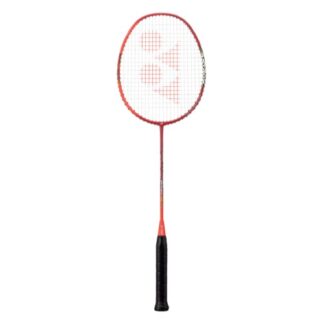
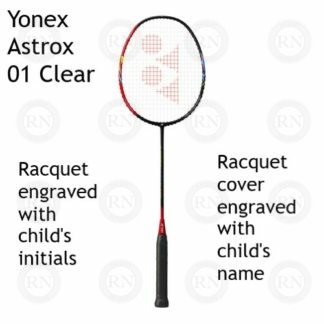
Yojnex Nanoray 20 badminton racquet
Teens tend to want frames made for elite level adults, not teens.
No demographic is more susceptible to marketing than teens. In the badminton world, teens tend to want the latest iteration of a racquet used by Lin Dan, Lee Chong Wei or Viktor Axelsen. It does not occur to them that putting that racquet in their hands might lead to losing, but it might.

Here at Racquet Network, our customers — many of whom are teens — test drive more than 1000 racquets every year. This is not surprising. We have a large selection of badminton racquets to choose from. We also allow customers an entire month to test drive them. So teens who are thinking about buying a new racquet have ample opportunity to find one that is perfectly suited to their current level of development.

So what is the point of test drive? Chances are, that if you give your teen the racquet he wants and just let him go play with it, he will come back saying he loves it. But how do you know if this new $250 racquet is better than the $90.00 racquet he was already playing with? Believe it or not, there is actually an objective way to tell the difference. The tests below will tell the tale and they can all be completed in a total of 20 minutes.


Racquet Selector For a full list of racquets in this category, please check out our ONLINE RACQUET SELECTOR. You can sort by sport, gender, brand, size, weight, balance and more.

Tests 1 & 2 – Baseline to Baseline Forehand/Backhand Tests

To begin the first test, two players take up positions in the center of the court along the baselines on opposite sides. They hit the shuttle back and forth, baseline to baseline. If the teen who is test driving a racquet is able to stand on one baseline and hit the shuttle out the back of the opposite court three out of four times consistently, that racquet passes the Baseline to Baseline Forehand Test.

The Baseline to Baseline Backhand Test is the same thing, but on the backhand side. If the teen who is test driving the racquet is able to stand on one baseline and hit the shuttle out the back of the opposite court three out of four times consistently, that racquet passes this test as well. If the teen cannot do this, the racquet is not flexible enough for the teen’s needs.

Tests 3 & 4 – Corner to Corner Forehand/Backhand Tests

The next two tests are more difficult, but they are extremely important. Players start the test by taking up positions near the corners of opposing baselines diagonally from each other. They try to hit the shuttle diagonally from corner to corer first on the forehand side, then on the backhand side. If they can hit the shuttles out of the court (past the corner) three out of four times consistently, the racquet passes. If not, it fails.

Speaking frankly, virtually all of the racquets that teens test drive will fail the Corner to Corner Backhand Test because most teens are not adept enough at this stroke to get the shuttle that deep on the diagonal backhand. So this test becomes a matter of good/better/best. In other words, the best racquet for each player is the racquet that allows them to hit the shuttle the deepest on the Corner to Corner Forehand/Backhand Test.


Racquet Selector For a full list of racquets in this category, please check out our ONLINE RACQUET SELECTOR. You can sort by sport, gender, brand, size, weight, balance and more.

Tracking the Results

Since the trial period lasts a month or more and since most teens will test drive eight or more racquets during this period, it is important to keep notes. The simplest way to do this is with your smartphone’s camera app. Just figure out the average depth the shuttle is reaching on the final test (Corner to Corner Backhand Test). Place the head of the demo racquet on that spot with the handle pointing at the corner you were hitting from and take a picture. If you have two racquets out that are reaching different spots, but them both on the court in their appropriate spots and include them in the same photo.

Why These Tests Matter

While playing matches with a racquet gives players a lot of subjective data about that racquet, these fours simple distance tests provide some important objective data. Because let’s face it, an inability to hit the shuttle from baseline-to-baseline and corner-to-corner will result in failure during matches. In order to win consistently, a player must be able to hit the shuttle deep enough to prevent opponents from going on the attack.

All too often, teens want a particular racquet because Lin Dan or Lee Chong Wei use it or because it has certain offensive features that they believe will help them hit harder or faster. But the single most important question that every player should ask about any racquet they are considering is this: can I hit the shuttle deep enough to reset when I (or my team) gets into trouble defensively? If the answer to this question is yes, then that particular racquet should go on the Maybe Right for Me List. If the answer is no, then the racquet should go on the Not Right for Me Right Now List.

Building the Maybe List

As players test drive badminton racquets, they will be putting each racquet onto one of two lists. The first list is the Not Right for Me Right Now List. This is the list of racquets that have failed the four distance tests above. The second list, the list of racquets that have passed the test, is the Maybe Right for Me List. For shorthand purposes, we call these the Maybe List and the No List.

Once a player has a selection of racquets on their Maybe List, they can start comparing them by playing with them. At this point, it makes sense to start judging racquets by more subjective criteria. And if two racquets are judged to be equal in every other way, then it’s fine to make a determination based on a favorite player’s endorsement. In fact, at this point, players can even make a final determination based on colour if that is important to them.


Racquet Selector For a full list of racquets in this category, please check out our ONLINE RACQUET SELECTOR. You can sort by sport, gender, brand, size, weight, balance and more.

What to do When they All Fail

So what should a player do when all racquets fail the four distance tests we have been discussing? This is not an uncommon situation. Teens, women and even some adult male recreational players often encounter this situation. This is because they are unable to hit the shuttle to full depth when hitting corner to corner on the backhand side.

In this situation the best option is the racquet that produces the best results. Remember the pictures we recommended taking with your smart phone during the distance tests? This is where these become important. The best racquet in this case is the racquet that produces the best result.

Once the best option is determined, our racquet technicians can help the player tweak the racquet to give it additional power. This will help get the shuttle a little deeper and make the best option even better.

But having said all of that, we find that the vast majority of teens under 14 who actually do these tests learn that the stiff and extra stiff racquets used by professional badminton players are not the best racquets for them. What they learn actually surprises them. They will actually score more points and win more matches when they play with racquets from the teen category. Why? Because these racquet are designed for players at their level of development.
Posted on

Should I Buy a Used Squash Racquet?

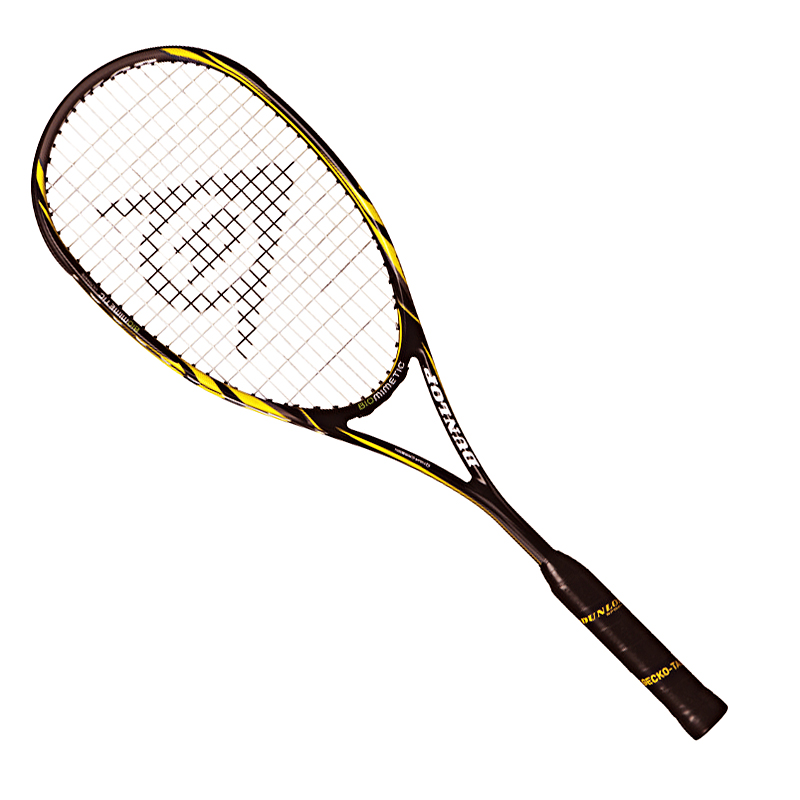
Dunlop Biomimetic Ultimate Squash Racquet
Buyer beware. Used squash racquets are generally not worth the price their sellers are asking.
In tight economic times like these, everybody wants to save money where they can. Buying used squash racquets, instead of new squash racquets, is one way to do that.

But you have to be careful if you want to go this route. Saving money is one possibility, but getting ripped off is another. So here are some things to consider when shopping for a used racquet.

Kijiji

It is certainly possible to get a good used squash racquet on Kijiji and other websites. However it is also possible to buy cheap knock-offs and once-broken-now-repaired frames.

Buyer beware. I won’t buy a racquet unless I can check the entire frame for tell-tale swelling, bulging or other signs of repair. I also need to examine every sticker or label on the racquet in order to prove to myself that it is not a knock off.

There is also the sucker-born-everyday factor. Today for example, I see six squash racquets for sale on Kijiji. Two are “almost new” for $40. Both can be purchased new for less. Two are for sale at $20.00 neither for which is worth half of that. And the remaining two are so old they are worthless, yet their owners want $10-12 for each.

Used Goods Stores

While it is possible to hold a racquet in your hands and examine it carefully in a used sporting goods store, it is not always possible to determine how old the racquet is. As a result, I have seen more than one intermediate player show up to play with a “new” racquet that is, in fact, ten years old.

It is advisable, therefore, to stop at a new racquet store and have a good long look at what is on the shelf this year before going to the used racquet store to buy last year’s model. Do this and you will increase your chances of spotting really old frames when you get to the used racquet store.

Hand-me-downs

Buying used racquets from friends and other players in your network can be tricky. Generally, you should pay no more than $40 for the frame, $40 for the string and $10 for the grip. In other words, a quality used racquet shouldn’t cost more than $90.

If the frame is a mid-range frame (not a high-end frame), deduct at least $20. If the strings have more than 50 games on them, deduct $20. If the grip needs to be replaced, deduct another $10.

Slightly Used Demos

Pros and sponsored players often get their racquets for free. Occasionally, they will play with them a few times and then put them away for good. In most cases, they will play with them until the brand rep gives them another new model.

Since pros, sponsored players and other frequent players treat their racquets with respect, you are not buying junk. In most cases, you are buying slightly-used, high-end racquets that are in near-pristine condition.

Check for wear on the grip and marks on the strings. If it’s a factory grip with very little wear and the strings are relatively clean with few black marks, you will know that the racquet hasn’t been used very much.

Price Ranges

New, low-end squash racquets are pre-strung and are priced in the $30 to $60 range.

New mid-range squash racquets are usually pre-strung and are priced in the $70 to $100 range.

New high-end squash racquets cost more than $150. Stringing costs another $20 to $50, depending on the type of string you like.

Posted on

Size 14 Court Shoes Calgary

Racquet Network carries Calgary’s largest selection of size 14 court shoes for men. In fact, we have the largest selection of court shoes of all kinds. Come in for a fitting with our experts and leave with the perfect fit for your feet. We are open 7 days a week. Monday to Friday 10:00am to 8:00pm. Saturday and Sunday 10:00am to 5:00pm.


Posted on

Best Badminton Racquets for Youth

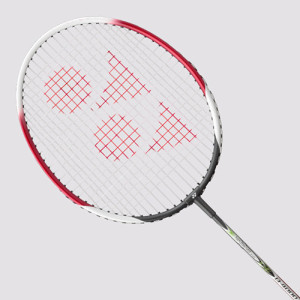
Yonex Youth badminton racquet
Too many parents set their kids up for failure by putting adult racquets in their hands before they are ready for them.
We define youth players as those aged 9 to 12. Depending on their height and musculature, some youth may move into the teen category as early as 11 while some may not get there until the age of 13 or 14. Some youth who are training regularly as part of a coached program may even move into adult racquets in their very early teens.

There are minor but important differences between youth racquets and teen racquets. Most youth racquets, for example, are a bit shorter and slightly more flexible than teen racquets. At the same, youth racquets are a bit longer and a little stiffer than children’s racquets. They are designed to hit the shuttle deeper into the opposing court than teen or adult racquets.

The best way to determine which racquet is right for your youth is to bring them into the store for consultation with one of our experts. We can help you pick out a badminton racquet that will bring out the best in the youth badminton player in your family.

Below is a sample of racquets that our experts have determined to be generally suitable for badminton players aged 9 to 12. For more information, please come into the store and consult with one of our experts. We are open 7 days a week and we carry Calgary’s largest selection of badminton racquets for men, women, teens and children.


Racquet Selector For a full list of racquets in this category, please check out our ONLINE RACQUET SELECTOR. You can sort by sport, gender, brand, size, weight, balance and more.

Youth Badminton Racquets

Nine badminton racquets suitable for youth badminton players.


Racquet Selector For a full list of racquets in this category, please check out our ONLINE RACQUET SELECTOR. You can sort by sport, gender, brand, size, weight, balance and more.
Posted on

Wrong Product – Right Price

It doesn’t matter what you are buying — racquets, shoes, string, accessories — price should not be your most important consideration. If it is, you will almost certainly make a poor decision.

In the past 24 hours, for example, we have had two customers make poor decisions because they had price-focused tunnel vision. One spent twice as much as she should have because she refused to consider a less expensive pickleball paddle that was perfectly suited to her needs. Another saved $40.00 but walked away with shoes that will actually detract from his on court performance and may actually lead to injury.

We understand that price has to be a consideration at some point in the purchasing process. That is completely reasonable. But it should never be a starting point.

Sports are about performance. The products that you purchase for sporting activities must not hinder or detract from your performance.

All too often, customers come into our store with the preconceived notion that expensive is good and cheap is bad. While this may be generally true (most products are priced according to their input costs), it is not always the case. Sometimes, the better option is the cheaper one.

How can you know? Come into our store and ask our experts.

Staff at Racquet Network are trained to ask questions. They want to know what level you will be playing at and the context you will be playing in. They will also want to know what problem you are trying to solve. Once they have this information, they will be able to help you select some products that fit your needs.

Often, our staff will come up with a category of products that will support your performance goals. And within that category, there will be items at different price points. At that point, price considerations become appropriate. But not before. Otherwise, you run the risk of buying the wrong product just because it is offered at the right price.